The Evidence Behind Why Training With Others Leads to Better Results
When most people think about getting fit, they focus on the “what“. To many this can be the exercises, the sets, the macros.
But often, the real difference-maker is who you train with, and the environment you are in.
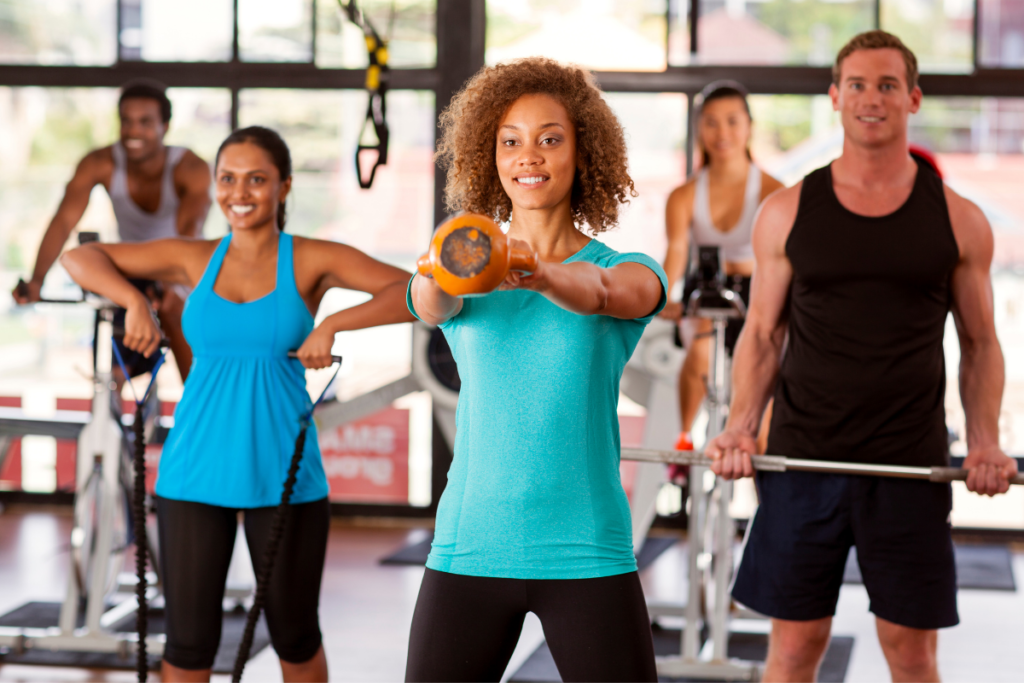
Regardless of a clinical setting or gym setting, we see it every day: clients who start working alongside others show up more, push harder, and enjoy the process more.
Turns out, science backs this up, training in a community can amplify your physical, mental, and emotional results in measurable ways.
What We Mean by “Community”
Community isn’t just about being in the same room, it’s belonging to a group that shares goals, accountability, and support.
Research defines true group exercise as programs that foster cohesion, shared experiences, social contact, and consistent feedback.
In a landmark meta-analysis of 44 studies, researchers found that true group exercise formats led to significantly higher adherence and fitness improvements than solo or home-based programs.
In other words, the more connected you feel to others, the more consistent and effective your training becomes.
(Burke et al., 2006, Journal of Sport & Exercise Psychology)
“True community means showing up not just for yourself, but with others who believe in your goals too.”
The Adherence Advantage: Why We Stay When We Belong
Adherence — the ability to stick with a plan — is the #1 predictor of long-term success in fitness.
In a recent systematic review, community-based physical activity programs led to measurable increases in movement sustained up to four years later.
Even small weekly gains—like 1,000 extra steps per day—compounded into meaningful improvements in cardiovascular health and longevity.
(Wahlich et al., BMJ Open, 2022)
When people feel part of something bigger, it’s easier to stay the course.
Group sessions create social accountability loops, if you skip, people notice.
That alone can double the likelihood of staying active compared to training solo.
Mental Health Gains: Social Connection as Medicine
It’s not just the muscles that get stronger in community settings—it’s the mind.
A 2024 meta-analysis found that older adults who joined community-based programs combining movement with social participation experienced significant reductions in loneliness and depression compared to control groups.
(Kim et al., Epidemiology & Health, 2024)
The mechanism behind this effect is simple but powerful:
social support → higher self-efficacy → better consistency → improved outcomes.
(Lin et al., Frontiers in Psychology, 2024)
This is why we emphasize not just movement quality, but connection, our sessions are built to create confidence and community.
“The people beside you are often the reason you keep going when it gets hard.”
Beyond Fitness: Community Improves Clinical Outcomes Too
The benefits of training in a group extend well beyond motivation.
Group-based exercise has been shown to reduce pain, disability, and improve function in individuals recovering from injury or chronic conditions.
(de Jesus Silva et al., 2025)
When you walk into our space, you’re not just joining a gym or a clinic, you’re joining a collective of people who want to get stronger, recover smarter, and live fully.
It’s a place where physical therapy meets performance, where coaches and clinicians collaborate, and where every rep, run, or recovery session connects back to something bigger: belonging, accountability, and progress together.
At Evolve, community isn’t just what we build, it’s what keeps people building.